Smart. Solar Ready.
Reimagine Hot Water

Lower energy bills
Lower energy bills
App control
App control
Reduced emissions
Reduced emissions
Customer Money Saved
Customer Money Saved
Clean Energy Generated
Clean Energy Generated
Trusted by



WHAT WE DO
Smart, Affordable Hot Water for Every Home
Reliable
Solar-Ready
Sustainable
Connected
Efficient
Future-Focused
Easy to Install
Cost-Saving
Trusted
We help South Africans save money, avoid surprise geyser failures, and
keep hot water flowing.
Your geyser is likely your home's biggest energy drain.
Elon Smart Water puts you in control.
Use solar power when it's available. Monitor your usage in real time. Get alerted to faults before they cost you. It's reliable hot water that adapts to how you live — and cuts what you pay.
Whether it's one home or an entire development, the return is immediate: lower running costs, fewer emergencies, and a system that earns its keep.
Hot water that works harder for you.


Smart Hot Water. Real Savings.
Cut your electricity bill by up to 50% with a solar-ready system that upgrades your existing geyser. See your savings in real time — and get early alerts before small issues become big expenses.
Smart Hot Water. Real Savings.
Cut your electricity bill by up to 50% with a solar-ready system that upgrades your existing geyser. See your savings in real time — and get early alerts before small issues become big expenses.

Build for the Future. Reduce Operating Costs.
Meet SANS 10400-XA requirements while lowering tenant energy bills and improving long-term building performance. Connected monitoring reduces maintenance and boosts tenant satisfaction
Build for the Future. Reduce Operating Costs.
Meet SANS 10400-XA requirements while lowering tenant energy bills and improving long-term building performance. Connected monitoring reduces maintenance and boosts tenant satisfaction
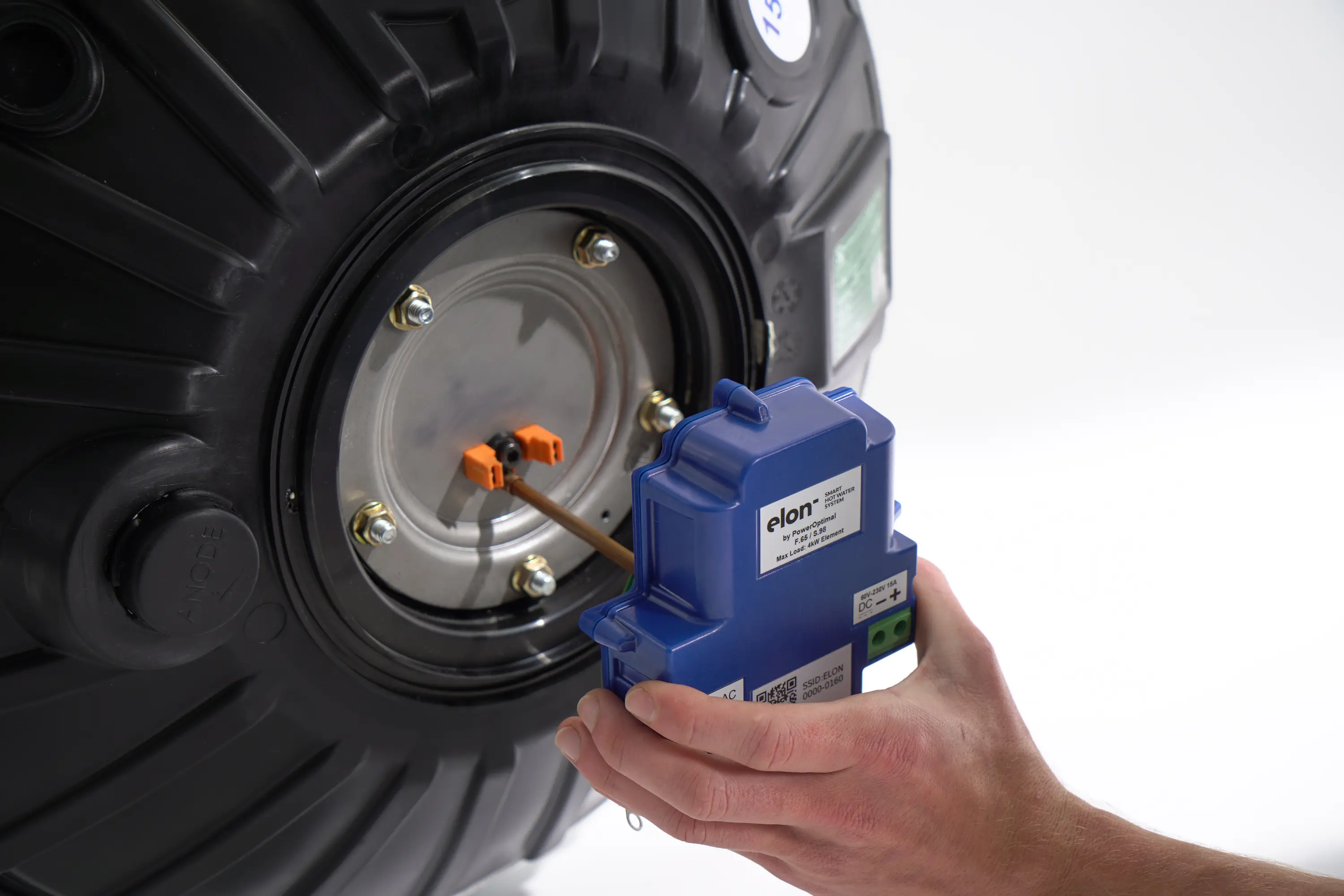
Easy to Install. Trusted in the Field.
Elon systems are fast to fit, compliant, and designed to minimise call-backs. With direct-PV heating and strong technical support, you deliver more value with less complexity.
Easy to Install. Trusted in the Field.
Elon systems are fast to fit, compliant, and designed to minimise call-backs. With direct-PV heating and strong technical support, you deliver more value with less complexity.

Reduce Claims with Proactive Intelligence.
70% of homeowner claims are geyser failures. Elon Smart detects leaks, corrosion, and abnormal usage early — helping insurers intervene before costly damage occurs.
Reduce Claims with Proactive Intelligence.
70% of homeowner claims are geyser failures. Elon Smart detects leaks, corrosion, and abnormal usage early — helping insurers intervene before costly damage occurs.
WHY WE DO WHAT WE DO
Smarter Energy Starts With Understanding the Problem
Hot water is one of the biggest hidden costs in South African homes and developments. It drives high electricity bills, causes most insurance claims, and remains a critical part of future-proofing buildings for solar adoption. These three insights break down the biggest challenges — and how the right system solves them.


Hot Water Is Draining Your Electricity Budget
Water heating can account for up to 40% of a home’s monthly electricity usage — and tariffs continue to rise every year. Solar-PV ready systems like Elon dramatically reduce these costs without replacing your geyser.
Hot Water Is Draining Your Electricity Budget
Water heating can account for up to 40% of a home’s monthly electricity usage — and tariffs continue to rise every year. Solar-PV ready systems like Elon dramatically reduce these costs without replacing your geyser.


70% of Home Insurance Claims Begin in the Ceiling
Leaks, corrosion, and burst geysers cause huge damage and disruption. Elon Smart uses real-time monitoring and early detection to prevent problems before they become expensive failures.
70% of Home Insurance Claims Begin in the Ceiling
Leaks, corrosion, and burst geysers cause huge damage and disruption. Elon Smart uses real-time monitoring and early detection to prevent problems before they become expensive failures.


Which Water Heating System Should You Install in 2026?
New building standards require cleaner, more efficient hot-water systems. Solar-PV heating is now the simplest, most scalable way to meet regulations, cut tenant costs, and reduce strain on the grid.
Which Water Heating System Should You Install in 2026?
New building standards require cleaner, more efficient hot-water systems. Solar-PV heating is now the simplest, most scalable way to meet regulations, cut tenant costs, and reduce strain on the grid.

Property Compliance & Energy Resilience Matter
New building standards require cleaner, more efficient hot-water systems. Solar-PV heating is now the simplest, most scalable way to meet regulations, cut tenant costs, and reduce strain on the grid.
Property Compliance & Energy Resilience Matter
New building standards require cleaner, more efficient hot-water systems. Solar-PV heating is now the simplest, most scalable way to meet regulations, cut tenant costs, and reduce strain on the grid.
OUR PARTNERS
Trusted by Industry Leaders
Proudly partnered with South Africa’s most recognised brands in energy, appliances, insurance, and property development.

Kwikot Haier
Kwikot Haier

Standard Bank
Standard Bank
REAL-WORLD RESULTS
Real Data. Real Homes. Real Savings.

Nine Months Monitored, 73% Solar — The Longest-Running Dataset in the Series
The smallest system in the series, the longest monitoring period, and still a 73% solar fraction. This is the proof point for budget-conscious households: even a modest 1.6 kWp array pays for itself and keeps delivering.
📍 Location
Roodepoort, Gauteng
👥 Household Size
3 people (couple + primary school-age child)
🔋 Solar Contribution
73%
⚡ Monthly Savings
⚡ Solar-PV Array Size
🗓️ Observation Period
September 2024 – June 2025 (9 months)
💵 Avg Monthly Grid Cost
112 kWh/month
Nine Months Monitored, 73% Solar — The Longest-Running Dataset in the Series
The smallest system in the series, the longest monitoring period, and still a 73% solar fraction. This is the proof point for budget-conscious households: even a modest 1.6 kWp array pays for itself and keeps delivering.
📍 Location
Roodepoort, Gauteng
👥 Household Size
3 people (couple + primary school-age child)
🔋 Solar Contribution
73%
⚡ Monthly Savings
1.6 kWp
🗓️ Observation Period
September 2024 – June 2025 (9 months)
💵 Avg Monthly Grid Cost
112 kWh/month
OUR BLOG
Our latest insights

Does a solar geyser work in winter, and at night?
In winter, yes, as long as the sun shines: solar panels produce more when it's cold. At night your tank keeps the day's heat. Cloud is the real limit, and here's how that's handled.
Solar PV Hot Water Explained
Oct 2, 2026

Can you convert your existing geyser to solar?
Yes. If you have a standard electric geyser and a roof that gets sun, you can convert it to solar and keep your tank. Here's what changes, what stays, and who does the work.
Installation & Compatibility
Sep 23, 2026
TESTIMONIALS
Customer Testimonials
Very happy with my Elon system. Saved me a fortune.
Steven Johnson
Since installing the Elon Smart in my house in Voëlklip, Hermanus, my electricity units per month went from 1610 units to 205 units from 12 December to 15 January, exceeding my expectations hugely. Can honestly recommend the Elon Smart system 100%. Massive saving on my electricity bill. The app super easy to navigate and very user friendly.
Rhonette Fick
4 years and still the best free hot water i have ever had. My house in Dullstroom has never not had hot water since we installed the Elon 100 in my house. The house is totally off grid and we aim to keep it that way. Thanks #Poweroptimal for your amazing product. Anthony
Anthony McHenry
The Elon Smart itself is quite a revolutionary product and has slashed my electricity bill while improving the amount of time I have hot water
Muhammad Rajah
We are using the Elon100 since September 2019 without any problem. We actually changed from Geyzerwise to Elon100 and happy ever after.
Michiel De Kock
We are using the Elon100 since September 2019 without any problem. We actually changed from Geyzerwise to Elon100 and happy ever after.
Michiel De Kock
Elon Smart Hot Water works like a bomb. Haven’t used main power since installation. But .,,, it’s been summer. Hopefully winter works just as well. Did install an extra panel so have 3 panels
Lorraine Stewart
FAQs
Got questions?
We’re here to make Elon Smart easy to understand. Find answers to the most common questions below.
Still got questions?


Product & Technology
Costs & Compliance
Installation & Warranty

It’s the only solution that retrofits standard electric geysers and is solar PV-ready—combining smart thermostat control, connected monitoring and seamless solar integration.
Yes — if you have a compatible geyser (for example from your preferred brand), your electrician can replace the thermostat with the Elon smart unit and convert it into a smart, solar-ready heater.
The Elon 100 is a solar-PV water-heater kit. The Smart Water solution is a next-generation smart thermostat with solar-PV capability. Both allow you to connect solar PV modules to your standard electric geyser, but the Elon Smart has additional benefits and capabilities, including being able to see the water temperature, monitor and control your geyser from a smartphone.
The most important factor here is the total size or power of the solar PV array (measured in kilowatt or kWp) rather than the number of modules. We recommend a minimum of 1 kWp. The maximum solar power rating for the Elon 100 is 4 kWp and for the Elon Smart it is 3 kWp. DO NOT exceed the maximum solar voltage and current ratings for the Elon 100 and Elon Smart, which are as follows: Elon 100: Isc < 20A DC, Voc < 250V DC. Elon Smart: Isc < 15A DC, Voc < 230V DC. The size of solar PV array required depends on the number of people in the household as well as your hot water usage levels. Please note: two parallel strings are only allowed for Elon 100, and only where the short-circuit current (Isc) of the panels are less than 10A (so that the short-circuit current of the parallel string would be less than 20A).
Loadshedding: Both the Elon 100 and Elon Smart will continue functioning during loadshedding as long as the sun is shining. If there is loadshedding at night or when there is no sun, then the Elon 100 or Elon Smart will be off. Power surges: The Elon 100 has AC overvoltage protection and can withstand AC voltages of up to 500V (more than double the normal 230V AC voltage) indefinitely. At voltages above 270V, it will disconnect the element to protect it. Once the voltage returns to the ‘normal’ range, it will reconnect the element. The Elon Smart also has extensive surge protection built in. However, for high lightning strike areas, installation of a surge protection device (SPD) is recommended.
Off-grid. The Elon 100 and the Elon Smart both have a double-pole, double-throw, break-before-make changeover relay that switches power supply to the element between solar PV (DC) and grid (AC). That means that it is mechanically impossible for DC power to flow into the AC supply or for AC power to flow into the DC supply. Hence, the Elon qualifies as ‘off-grid’ for solar PV installations.
No, the Elon Smart is designed to fit into Kwikot geysers. It should NOT be installed in geysers from other manufacturers.
No, at this time the Elon Smart is NOT compatible with Xtend PTC elements.
No, neither the Elon 100 nor the Elon Smart have a MPPT. Maximum Power Point Tracking (MPPT) is a technique used with variable power sources like solar PV modules to maximise energy extraction as the power output varies. Most inverters and charge controllers have MPPT built in. However, MPPT adds cost, and is not strictly necessary where direct DC energy is utilised. If the solar PV string and geyser element are matched well, the energy loss for a system with no MPPT vs a system with MPPT is small. In fact, for Elon units, the loss is less than 10% when the PV string and element are matched well. This is because both the Elon 100 and Elon Smart start feeding energy to the geyser at just 20V under load, whilst most MPPT systems require 100 to 150V to become operational. Hence, in low light and cloudy conditions, the Elon feeds energy to the geyser at times when an inverter or MPPT would not switch on at all. This makes up at least partially for the loss in efficiency due to the lack of a MPPT. It’s more cost-effective to add a solar PV module than to add a MPPT.
Yes, you can connect your inverter AC output to the Elon Smart AC (grid) input. However, you should remember that, when the element is drawing power from the AC side via the Elon Smart, it will draw the full power rating of the element. For example, if it is a 3 kW element, it will draw 3 kW of power. If it is a 4 kW element, it will draw 4 kW of power. Thus, you will need at least an 8 kW inverter to avoid frequent inverter tripping. Even for an 8 kW inverter, you cannot switch on many high-powered appliances at the same time as the geyser. You should also keep in mind that a 3 or 4 kW power draw can drain your batteries quickly. Hence, you only want to use inverter geyser heating in the early to mid-afternoon, when batteries are typically fully charged and the solar PV output is high. The recommended time zone for custom AC heating timer settings on the Elon Smart is in the 12:30 to 15:00 window. You can experiment with the length of this ‘boost’ window to suit your specific circumstances and solar PV installation (for example, you can set it to run on AC / grid power from 13:30 to 15:00). An alternative is to manually press the ‘heat with grid now’ button in the Elon Smart app on days when the batteries are full. But this requires manual monitoring, which is not always desirable. Please note: Do NOT install a timer between the inverter and the Elon Smart. The inverter should be set up to always supply power to the Elon Smart. Use the Elon Smart’s custom timers to control when the geyser is heated from the inverter.
kWh is a unit of energy. It is equivalent to 1 kilowatt (kW) of power expended for 1 hour. If you have a light bulb of 100W, then it will consume 1 kWh in 10 hours (0.1 kW x 10h = 1 kWh). If you have a geyser with a 3 kW element, then it will consume 3 kWh every hour when using grid power.
Explore the website (see for example the Projects page and the Resources page) or contact the PowerOptimal team for more information.
FAQs
Got questions?
We’re here to make Elon Smart easy to understand. Find answers to the most common questions below.
Product & Technology
Costs & Compliance
Installation & Warranty
It’s the only solution that retrofits standard electric geysers and is solar PV-ready—combining smart thermostat control, connected monitoring and seamless solar integration.
Yes — if you have a compatible geyser (for example from your preferred brand), your electrician can replace the thermostat with the Elon smart unit and convert it into a smart, solar-ready heater.
The Elon 100 is a solar-PV water-heater kit. The Smart Water solution is a next-generation smart thermostat with solar-PV capability. Both allow you to connect solar PV modules to your standard electric geyser, but the Elon Smart has additional benefits and capabilities, including being able to see the water temperature, monitor and control your geyser from a smartphone.
The most important factor here is the total size or power of the solar PV array (measured in kilowatt or kWp) rather than the number of modules. We recommend a minimum of 1 kWp. The maximum solar power rating for the Elon 100 is 4 kWp and for the Elon Smart it is 3 kWp. DO NOT exceed the maximum solar voltage and current ratings for the Elon 100 and Elon Smart, which are as follows: Elon 100: Isc < 20A DC, Voc < 250V DC. Elon Smart: Isc < 15A DC, Voc < 230V DC. The size of solar PV array required depends on the number of people in the household as well as your hot water usage levels. Please note: two parallel strings are only allowed for Elon 100, and only where the short-circuit current (Isc) of the panels are less than 10A (so that the short-circuit current of the parallel string would be less than 20A).
Loadshedding: Both the Elon 100 and Elon Smart will continue functioning during loadshedding as long as the sun is shining. If there is loadshedding at night or when there is no sun, then the Elon 100 or Elon Smart will be off. Power surges: The Elon 100 has AC overvoltage protection and can withstand AC voltages of up to 500V (more than double the normal 230V AC voltage) indefinitely. At voltages above 270V, it will disconnect the element to protect it. Once the voltage returns to the ‘normal’ range, it will reconnect the element. The Elon Smart also has extensive surge protection built in. However, for high lightning strike areas, installation of a surge protection device (SPD) is recommended.
Off-grid. The Elon 100 and the Elon Smart both have a double-pole, double-throw, break-before-make changeover relay that switches power supply to the element between solar PV (DC) and grid (AC). That means that it is mechanically impossible for DC power to flow into the AC supply or for AC power to flow into the DC supply. Hence, the Elon qualifies as ‘off-grid’ for solar PV installations.
No, the Elon Smart is designed to fit into Kwikot geysers. It should NOT be installed in geysers from other manufacturers.
No, at this time the Elon Smart is NOT compatible with Xtend PTC elements.
No, neither the Elon 100 nor the Elon Smart have a MPPT. Maximum Power Point Tracking (MPPT) is a technique used with variable power sources like solar PV modules to maximise energy extraction as the power output varies. Most inverters and charge controllers have MPPT built in. However, MPPT adds cost, and is not strictly necessary where direct DC energy is utilised. If the solar PV string and geyser element are matched well, the energy loss for a system with no MPPT vs a system with MPPT is small. In fact, for Elon units, the loss is less than 10% when the PV string and element are matched well. This is because both the Elon 100 and Elon Smart start feeding energy to the geyser at just 20V under load, whilst most MPPT systems require 100 to 150V to become operational. Hence, in low light and cloudy conditions, the Elon feeds energy to the geyser at times when an inverter or MPPT would not switch on at all. This makes up at least partially for the loss in efficiency due to the lack of a MPPT. It’s more cost-effective to add a solar PV module than to add a MPPT.
Yes, you can connect your inverter AC output to the Elon Smart AC (grid) input. However, you should remember that, when the element is drawing power from the AC side via the Elon Smart, it will draw the full power rating of the element. For example, if it is a 3 kW element, it will draw 3 kW of power. If it is a 4 kW element, it will draw 4 kW of power. Thus, you will need at least an 8 kW inverter to avoid frequent inverter tripping. Even for an 8 kW inverter, you cannot switch on many high-powered appliances at the same time as the geyser. You should also keep in mind that a 3 or 4 kW power draw can drain your batteries quickly. Hence, you only want to use inverter geyser heating in the early to mid-afternoon, when batteries are typically fully charged and the solar PV output is high. The recommended time zone for custom AC heating timer settings on the Elon Smart is in the 12:30 to 15:00 window. You can experiment with the length of this ‘boost’ window to suit your specific circumstances and solar PV installation (for example, you can set it to run on AC / grid power from 13:30 to 15:00). An alternative is to manually press the ‘heat with grid now’ button in the Elon Smart app on days when the batteries are full. But this requires manual monitoring, which is not always desirable. Please note: Do NOT install a timer between the inverter and the Elon Smart. The inverter should be set up to always supply power to the Elon Smart. Use the Elon Smart’s custom timers to control when the geyser is heated from the inverter.
kWh is a unit of energy. It is equivalent to 1 kilowatt (kW) of power expended for 1 hour. If you have a light bulb of 100W, then it will consume 1 kWh in 10 hours (0.1 kW x 10h = 1 kWh). If you have a geyser with a 3 kW element, then it will consume 3 kWh every hour when using grid power.
Explore the website (see for example the Projects page and the Resources page) or contact the PowerOptimal team for more information.
Still got questions?
FAQs
Got questions?
We’re here to make Elon Smart easy to understand. Find answers to the most common questions below.
Product & Technology
Costs & Compliance
Installation & Warranty

It’s the only solution that retrofits standard electric geysers and is solar PV-ready—combining smart thermostat control, connected monitoring and seamless solar integration.
Yes — if you have a compatible geyser (for example from your preferred brand), your electrician can replace the thermostat with the Elon smart unit and convert it into a smart, solar-ready heater.
The Elon 100 is a solar-PV water-heater kit. The Smart Water solution is a next-generation smart thermostat with solar-PV capability. Both allow you to connect solar PV modules to your standard electric geyser, but the Elon Smart has additional benefits and capabilities, including being able to see the water temperature, monitor and control your geyser from a smartphone.
The most important factor here is the total size or power of the solar PV array (measured in kilowatt or kWp) rather than the number of modules. We recommend a minimum of 1 kWp. The maximum solar power rating for the Elon 100 is 4 kWp and for the Elon Smart it is 3 kWp. DO NOT exceed the maximum solar voltage and current ratings for the Elon 100 and Elon Smart, which are as follows: Elon 100: Isc < 20A DC, Voc < 250V DC. Elon Smart: Isc < 15A DC, Voc < 230V DC. The size of solar PV array required depends on the number of people in the household as well as your hot water usage levels. Please note: two parallel strings are only allowed for Elon 100, and only where the short-circuit current (Isc) of the panels are less than 10A (so that the short-circuit current of the parallel string would be less than 20A).
Loadshedding: Both the Elon 100 and Elon Smart will continue functioning during loadshedding as long as the sun is shining. If there is loadshedding at night or when there is no sun, then the Elon 100 or Elon Smart will be off. Power surges: The Elon 100 has AC overvoltage protection and can withstand AC voltages of up to 500V (more than double the normal 230V AC voltage) indefinitely. At voltages above 270V, it will disconnect the element to protect it. Once the voltage returns to the ‘normal’ range, it will reconnect the element. The Elon Smart also has extensive surge protection built in. However, for high lightning strike areas, installation of a surge protection device (SPD) is recommended.
Off-grid. The Elon 100 and the Elon Smart both have a double-pole, double-throw, break-before-make changeover relay that switches power supply to the element between solar PV (DC) and grid (AC). That means that it is mechanically impossible for DC power to flow into the AC supply or for AC power to flow into the DC supply. Hence, the Elon qualifies as ‘off-grid’ for solar PV installations.
No, the Elon Smart is designed to fit into Kwikot geysers. It should NOT be installed in geysers from other manufacturers.
No, at this time the Elon Smart is NOT compatible with Xtend PTC elements.
No, neither the Elon 100 nor the Elon Smart have a MPPT. Maximum Power Point Tracking (MPPT) is a technique used with variable power sources like solar PV modules to maximise energy extraction as the power output varies. Most inverters and charge controllers have MPPT built in. However, MPPT adds cost, and is not strictly necessary where direct DC energy is utilised. If the solar PV string and geyser element are matched well, the energy loss for a system with no MPPT vs a system with MPPT is small. In fact, for Elon units, the loss is less than 10% when the PV string and element are matched well. This is because both the Elon 100 and Elon Smart start feeding energy to the geyser at just 20V under load, whilst most MPPT systems require 100 to 150V to become operational. Hence, in low light and cloudy conditions, the Elon feeds energy to the geyser at times when an inverter or MPPT would not switch on at all. This makes up at least partially for the loss in efficiency due to the lack of a MPPT. It’s more cost-effective to add a solar PV module than to add a MPPT.
Yes, you can connect your inverter AC output to the Elon Smart AC (grid) input. However, you should remember that, when the element is drawing power from the AC side via the Elon Smart, it will draw the full power rating of the element. For example, if it is a 3 kW element, it will draw 3 kW of power. If it is a 4 kW element, it will draw 4 kW of power. Thus, you will need at least an 8 kW inverter to avoid frequent inverter tripping. Even for an 8 kW inverter, you cannot switch on many high-powered appliances at the same time as the geyser. You should also keep in mind that a 3 or 4 kW power draw can drain your batteries quickly. Hence, you only want to use inverter geyser heating in the early to mid-afternoon, when batteries are typically fully charged and the solar PV output is high. The recommended time zone for custom AC heating timer settings on the Elon Smart is in the 12:30 to 15:00 window. You can experiment with the length of this ‘boost’ window to suit your specific circumstances and solar PV installation (for example, you can set it to run on AC / grid power from 13:30 to 15:00). An alternative is to manually press the ‘heat with grid now’ button in the Elon Smart app on days when the batteries are full. But this requires manual monitoring, which is not always desirable. Please note: Do NOT install a timer between the inverter and the Elon Smart. The inverter should be set up to always supply power to the Elon Smart. Use the Elon Smart’s custom timers to control when the geyser is heated from the inverter.
kWh is a unit of energy. It is equivalent to 1 kilowatt (kW) of power expended for 1 hour. If you have a light bulb of 100W, then it will consume 1 kWh in 10 hours (0.1 kW x 10h = 1 kWh). If you have a geyser with a 3 kW element, then it will consume 3 kWh every hour when using grid power.
Explore the website (see for example the Projects page and the Resources page) or contact the PowerOptimal team for more information.